The 2026 World Cup rewrote the record books. Before the tournament, Miroslav Klose’s 16 goals had stood as the all-time World Cup record since 2014. By the end of the competition in July 2026, both Kylian Mbappé and Lionel Messi had passed him, and Mbappé finished on top.
Mbappé scored twice for France in the third-place play-off against England in Miami on 18 July 2026, a 6–4 defeat for France, to move to 22 goals, one ahead of Messi.
The race to replace Klose played out over the course of the tournament. Messi drew level on 16 goals with a hat-trick against Algeria on 16 June and moved clear with two more against Austria in Dallas on 22 June. Mbappé, who arrived in North America with 12 World Cup goals, kept pace with braces against Senegal, Iraq and Sweden before his final two goals against England settled the record. Below is the updated all-time list, followed by profiles of the record holders, the records that still stand and the players who could challenge Mbappé in future.
All-Time World Cup Top Scorers (Men’s Tournament)
| Rank | Player | Country | Goals |
|---|---|---|---|
| 1 | Kylian Mbappé | France | 22 |
| 2 | Lionel Messi | Argentina | 21 |
| 3 | Miroslav Klose | Germany | 16 |
| 4 | Ronaldo | Brazil | 15 |
| 5= | Gerd Müller | West Germany | 14 |
| 5= | Harry Kane | England | 14 |
| 7 | Just Fontaine | France | 13 |
| 8 | Pelé | Brazil | 12 |
| 9= | Sándor Kocsis | Hungary | 11 |
| 9= | Jürgen Klinsmann | West Germany / Germany | 11 |
| 9= | Cristiano Ronaldo | Portugal | 11 |
Figures are goals scored at World Cup final tournaments only. Qualifying matches are not counted.
How the Scoring Record Has Changed Hands
The all-time World Cup scoring record has changed hands only a handful of times since the 1950s. Each new holder has tended to keep it for a generation.
| Record holder | Country | Total | Became sole record holder |
|---|---|---|---|
| Just Fontaine | France | 13 | 1958 |
| Gerd Müller | West Germany | 14 | 1974 |
| Ronaldo | Brazil | 15 | 2006 |
| Miroslav Klose | Germany | 16 | 2014 |
| Lionel Messi | Argentina | 21 | 2026 (briefly) |
| Kylian Mbappé | France | 22 | 2026 |
Fontaine’s 13 goals all came in a single tournament, which made him the all-time leader at once. Gerd Müller overtook him in 1974, adding four goals to the ten he had scored in 1970. Ronaldo broke Müller’s record with his 15th goal, against Ghana in 2006, and Klose equalled Ronaldo against Ghana in 2014 before scoring his 16th in Germany’s famous 7–1 semi-final win over Brazil. Messi then led the list for part of the 2026 tournament, until Mbappé finished one goal ahead of him.
Kylian Mbappé: The New Record Holder
Mbappé first appeared at a World Cup in Russia in 2018, when he helped France win the trophy as a teenager. He then won the Golden Boot in Qatar in 2022, including a hat-trick in the final against Argentina. In 2026 he again finished as the tournament’s top scorer with 10 goals, taking his overall total to 22 across three tournaments.
Mbappé’s World Cup Goals by Tournament
| Tournament | Goals | Outcome for France |
|---|---|---|
| 2018 Russia | 4 | Champions |
| 2022 Qatar | 8 (Golden Boot) | Runners-up |
| 2026 USA/Canada/Mexico | 10 (Golden Boot) | Fourth place |
His 2026 goals came against Senegal (two), Iraq (two), Sweden (two) in the Round of 32, Paraguay (a penalty) in the Round of 16, Morocco in the quarter-final and England (two) in the third-place play-off. That made him the first player to win the Golden Boot at two World Cups, and his ten goals in knockout matches are also reported as a record.
Because he reached this total so early in his career, many observers expect his record to keep growing if he plays at the 2030 World Cup.
Lionel Messi: 21 Goals Across Six World Cups
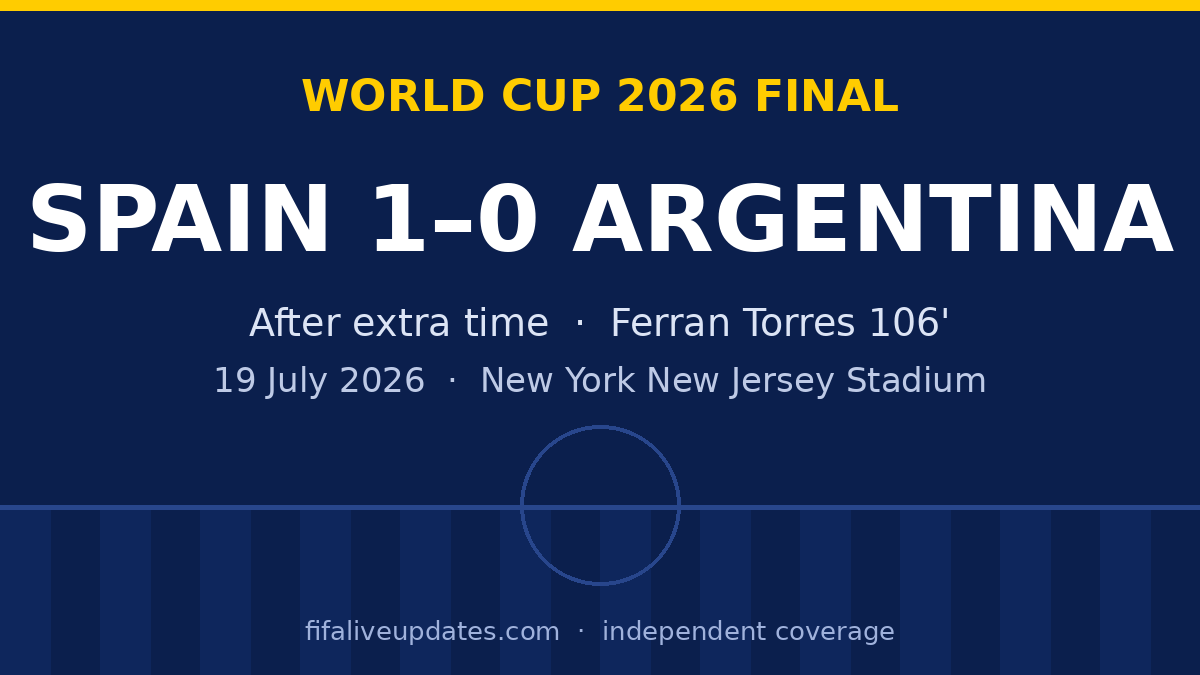
Messi played at his first World Cup in 2006 and appeared at six tournaments in total, a record he shares with Cristiano Ronaldo. He won the trophy with Argentina in 2022 and reached the final again in 2026, where Argentina lost 1–0 to Spain after extra time. His 21 goals put him second on the all-time list, and he also holds the record for the most World Cup matches played.
Messi’s World Cup Goals by Tournament
| Tournament | Goals | Outcome for Argentina |
|---|---|---|
| 2006 Germany | 1 | Quarter-finals |
| 2010 South Africa | 0 | Quarter-finals |
| 2014 Brazil | 4 | Runners-up |
| 2018 Russia | 1 | Round of 16 |
| 2022 Qatar | 7 | Champions |
| 2026 USA/Canada/Mexico | 8 | Runners-up |
Remarkably, Messi scored 15 of his 21 World Cup goals after turning 35, across his two most recent tournaments. By the end of 2026 he had played 34 World Cup matches and also held the all-time record for World Cup assists, with 12.
Profiles: The Rest of the Top 10
Miroslav Klose (Germany) – 16 goals
Klose was the model of consistency, scoring five goals in both 2002 and 2006, four in 2010 and two in 2014, when he finally lifted the trophy. Many of his goals were headers or close-range finishes, and he held the record outright for 12 years.
Ronaldo (Brazil) – 15 goals
The Brazilian striker scored four goals in 1998, eight in 2002, when he won the Golden Boot and the World Cup, and three in 2006. His two goals in the 2002 final against Germany completed one of football’s great comeback stories after injuries had threatened his career.
Gerd Müller (West Germany) – 14 goals
Müller scored ten goals in 1970, winning the Golden Boot, and four more in 1974, including the winning goal in the final against the Netherlands in Munich. He reached 14 goals in just 13 matches, a scoring rate few have matched.
Harry Kane (England) – 14 goals
Kane won the Golden Boot with six goals in 2018, added two in 2022 and scored six more in 2026. That took him level with Gerd Müller on the all-time list and well clear of Gary Lineker’s 10 as England’s leading World Cup scorer. His 2026 campaign ended with a win in the third-place play-off against France.
Just Fontaine (France) – 13 goals
Fontaine’s entire World Cup tally came at one tournament, in Sweden in 1958, where he scored in all six of France’s matches. It remains the most goals scored at a single World Cup.
Pelé (Brazil) – 12 goals
Pelé scored at four World Cups between 1958 and 1970, starting as a 17-year-old in Sweden, where he scored twice in the final. He remains the only player to win the tournament three times.
Sándor Kocsis, Jürgen Klinsmann and Cristiano Ronaldo – 11 goals
Kocsis scored all 11 of his goals for Hungary’s ‘Golden Team’ in 1954, including a hat-trick against South Korea and four goals against West Germany in the group stage, though Hungary lost the final to West Germany. Klinsmann scored at three tournaments (1990, 1994 and 1998) and won the trophy in 1990. Cristiano Ronaldo reached 11 in 2026 with two goals against Uzbekistan and one against Croatia, becoming the first player to score at six different World Cups.
Golden Boot Winners Since 2006
The Golden Boot goes to the top scorer at each tournament. Recent winners show how the expanded format has pushed totals higher.
| Tournament | Golden Boot winner | Goals |
|---|---|---|
| 2006 Germany | Miroslav Klose (Germany) | 5 |
| 2010 South Africa | Thomas Müller (Germany) | 5 |
| 2014 Brazil | James Rodríguez (Colombia) | 6 |
| 2018 Russia | Harry Kane (England) | 6 |
| 2022 Qatar | Kylian Mbappé (France) | 8 |
| 2026 USA/Canada/Mexico | Kylian Mbappé (France) | 10 |
In 2026, Mbappé finished ahead of Messi (eight goals), Erling Haaland and Jude Bellingham (seven each), and Harry Kane and Ousmane Dembélé (six each).
Records That Still Stand
- Just Fontaine scored 13 goals at a single World Cup, in Sweden in 1958. No player has come close to that total in one tournament since.
- Miroslav Klose scored his 16 goals across four tournaments (2002, 2006, 2010 and 2014).
- Ronaldo of Brazil scored 15 goals, including both goals in the 2002 final against Germany.
- Pelé scored 12 goals and remains the only player to win three World Cups (1958, 1962 and 1970).
Other Notable World Cup Scoring Records
- Most goals in a single match: Oleg Salenko scored five for Russia against Cameroon at USA 1994.
- Fastest goal: Hakan Şükür scored after 11 seconds for Turkey against South Korea in the third-place play-off in 2002.
- Most World Cups scored at: Cristiano Ronaldo is the only player to score at six tournaments (2006 to 2026).
- Most Golden Boots: Kylian Mbappé is the only player to finish as top scorer at two World Cups (2022 and 2026).
- Most World Cup assists: Lionel Messi, with 12 after the 2026 tournament.
How World Cup Goals Are Counted
All-time scoring lists can look different from source to source, so it helps to know what counts. The figures on this page follow the standard approach used by FIFA:
- Only goals at World Cup final tournaments count. Goals in qualifying campaigns, friendlies and other competitions are excluded.
- Penalties scored during normal time or extra time count as goals. Kicks in a penalty shoot-out do not, even though they decide the match.
- Goals in extra time are included, as are goals in third-place play-offs, which is how Mbappé took the record in 2026.
- Own goals are not credited to any attacking player.
- Occasionally, FIFA reviews footage and reassigns a goal, particularly from early tournaments where records were incomplete, so older totals have sometimes been revised.
This is why the list only includes the men’s World Cup finals. Separate records exist for qualifying, the Women’s World Cup and FIFA’s youth tournaments.
Leading World Cup Scorers by Country
For several of football’s biggest nations, the all-time World Cup leader is also one of the names in the overall top 10.
| Country | Leading World Cup scorer | Goals |
|---|---|---|
| France | Kylian Mbappé | 22 |
| Argentina | Lionel Messi | 21 |
| Germany | Miroslav Klose | 16 |
| Brazil | Ronaldo | 15 |
| England | Harry Kane | 14 |
| Hungary | Sándor Kocsis | 11 |
| Portugal | Cristiano Ronaldo | 11 |
| Italy | Roberto Baggio, Paolo Rossi and Christian Vieri | 9 each |
Cristiano Ronaldo overtook Eusébio, whose nine goals all came at the 1966 World Cup, to become Portugal’s leading scorer at the tournament. Italy’s joint record is shared by three players from different eras: Rossi, who won the Golden Boot in 1982, Baggio, who starred in 1990, 1994 and 1998, and Vieri, who scored at the 1998 and 2002 tournaments.
Why Scoring Records Are Falling
The 2026 World Cup was the first with 48 teams and 104 matches, compared with 64 matches in the 32-team era. Teams that reach the final now play eight matches instead of seven, which gives top forwards more chances to score. With the 2030 tournament also expected to feature at least 48 teams, the all-time list could change again.
It is worth remembering that goals were far more plentiful in the early decades. The 1954 World Cup in Switzerland produced 140 goals in 26 matches, an average of more than five per game, which helps explain how Kocsis scored 11 and Fontaine 13 at a single tournament. As defences became more organised from the 1960s onwards, goals per game fell sharply, and for decades the record holders built their totals slowly over several tournaments. Klose, for example, needed four World Cups and 24 matches to reach 16 goals. The modern record breakers combine longevity with more matches per tournament.
The bigger format also means more matches between teams of very different strength in the group stage and the new Round of 32, which can produce lopsided scorelines. That helps explain why Mbappé, Messi, Haaland and Bellingham all reached seven goals or more in 2026, a total that would have been enough to win the Golden Boot at every tournament between 2006 and 2018. For a full overview of how the 48-team tournament was organised, see our 2026 World Cup guide.
Who Could Challenge Mbappé’s Record Next?
Mbappé is the clear favourite to extend his own record. He will be 31 at the 2030 World Cup in Morocco, Spain and Portugal, and could even play at the 2034 World Cup in Saudi Arabia. Both tournaments are planned with 48 teams, so the opportunities to score will remain high.
Messi and Cristiano Ronaldo are widely expected to have played their final World Cups in 2026, which means their totals of 21 and 11 are likely to be final. Harry Kane, on 14 goals, would be 36 by 2030, so he would need another prolific tournament to climb further.
The most intriguing long-term challenger is Erling Haaland, who scored seven goals at his first World Cup in 2026 for Norway. If Norway continue to qualify and he stays fit, Haaland is the type of player who could build a total in the high teens or beyond. England’s Jude Bellingham, who also scored seven times in 2026, is another name to watch, although he is a midfielder rather than a central striker. Reaching the World Cup in the first place is the first hurdle; our guide to how World Cup qualification works explains the route for each continent.
Women’s World Cup Top Scorers
This list covers the men’s tournament only. In the Women’s World Cup, the all-time record belongs to Brazil’s Marta, with 17 goals, ahead of Germany’s Birgit Prinz and the USA’s Abby Wambach, who both scored 14. Marta became the first player, male or female, to score at five World Cups when she found the net in 2019. The next edition takes place in Brazil in 2027; find out more in our 2027 Women’s World Cup guide.
What Mbappé’s Record Means
Records like Fontaine’s 13 in a single tournament and Pelé’s three winner’s medals may never be matched, but the all-time scoring list is now more fluid than at any time in the tournament’s history. Longer tournaments, more matches and the remarkable longevity of modern players have changed what is possible. Mbappé reached 22 goals before turning 28, and with at least one more World Cup likely ahead of him, his final total could stay out of reach for a very long time.
Frequently Asked Questions
Who is the all-time top scorer in World Cup history?
Kylian Mbappé of France, with 22 goals after the 2026 World Cup.
How many World Cup goals does Messi have?
Lionel Messi has 21 World Cup goals, second on the all-time list.
Who scored the most goals at a single World Cup?
Just Fontaine of France, with 13 goals at the 1958 tournament in Sweden.
Who has scored at the most World Cups?
Cristiano Ronaldo is the only player to score at six World Cups, from 2006 to 2026. He has 11 World Cup goals in total.
Who won the Golden Boot at the 2026 World Cup?
Kylian Mbappé, with 10 goals. He also won it in 2022 with eight, making him the first player to win the award twice.
How many World Cup goals has Harry Kane scored?
Harry Kane has 14 World Cup goals, level with Gerd Müller in joint fifth place and the most by any England player.
What is the record for most goals in one World Cup match?
Five, by Oleg Salenko for Russia against Cameroon at the 1994 World Cup.
Who is the top scorer in Women’s World Cup history?
Marta of Brazil, with 17 goals.
Keep reading: browse every champion in our FIFA World Cup winners list, or relive the 2026 World Cup final.